Tactical Sling Bag Manufacturer for Tactical and Outdoor Brands
A Tactical Sling Bag brings a crossbody carrying format to tactical-inspired and outdoor equipment collections. Compared with conventional backpacks, this bag category offers a different way to carry selected essentials while creating opportunities for distinctive shapes, exterior details, and storage arrangements.
For importers, wholesalers, and private-label brands, sling bags can broaden an existing collection without relying entirely on traditional backpack designs. Buyers can develop products for everyday carry, outdoor accessories, or tactical-style retail ranges according to the actual design and intended customer.
Avatar Xiamen Outdoor Products Co., Ltd. manufactures tactical bags, backpacks, pouches, duffle bags, and related equipment for B2B customers. Through OEM and ODM cooperation, buyers can discuss product specifications, material choices, colors, branding, and packaging requirements for their own collections.
Crossbody Design That Defines the Product
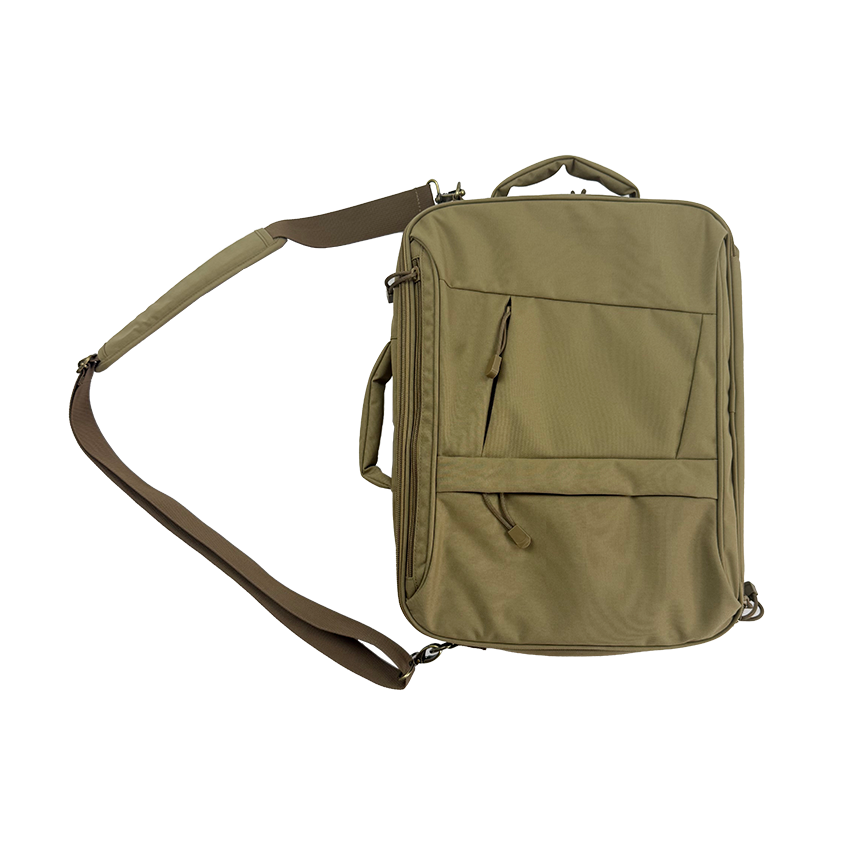
The defining characteristic of a Tactical Sling Bag is its crossbody carrying arrangement. A strap allows the bag to be worn across the torso, offering an alternative to carrying a bag by hand or using a conventional two-strap backpack.
The exact carrying experience depends on the bag’s dimensions, strap position, adjustment range, and overall construction. Some designs may be intended to rest closer to the chest or back, while others may have a different profile. Buyers should evaluate the physical sample to determine which configuration best fits their target market.
From a product-development perspective, the strap is more than a visual detail. Its width, connection points, adjustment hardware, and compatibility with the bag’s shape all influence the finished product. These specifications should be reviewed before the design is approved for production.
For brands building a coordinated range, the crossbody format also creates a recognizable product category alongside backpacks, waist packs, and utility pouches.
Defining the Right Market Position
Not every tactical sling bag serves the same customer. The same general bag category can be presented differently depending on its styling, dimensions, material selection, and storage configuration.
A Tactical Sling Bag may be developed for one of several market directions:
- Everyday carry: A compact bag concept for frequently used personal items.
- Tactical-style accessories: A design that complements a broader tactical equipment collection.
- Outdoor activities: A crossbody carrying option for selected essentials during outdoor outings.
- Urban utility: A practical bag concept combining functional organization with a tactical-inspired appearance.
These are potential positioning options rather than claims that every model suits every application. Buyers should select the most relevant direction based on the actual product design and customer requirements.
Clear positioning also helps determine the product’s dimensions, color palette, branding, and price range. A focused brief gives the manufacturer a more useful starting point than a general request for a tactical-style bag.
Shape, Proportion, and Visual Identity
The silhouette plays an important role in how a sling bag stands out within a product catalog. Width, height, depth, panel arrangement, and strap placement all contribute to the overall appearance.
When developing a Tactical Sling Bag, buyers should consider how its proportions relate to the intended carrying purpose. A compact profile may suit a minimal everyday-carry concept, while a larger design may be more appropriate when the product is intended to accommodate more equipment. The final capacity should be established from the actual dimensions and construction.
Exterior design can also support brand differentiation. Panel shapes, contrasting fabrics, stitching details, labels, and hardware finishes can be coordinated to create a recognizable product identity. These elements should complement the bag’s function rather than introduce unnecessary complexity.
For private-label buyers, approving the visual details early can reduce repeated sample changes. A clear reference for colors, logo size, placement, and component finishes also helps maintain consistency between the sample and subsequent orders.
Organizing Storage Around the Intended Load
A sling bag’s storage arrangement should follow the needs of its target user. The layout affects what can be carried, how items are separated, and how easily the contents can be accessed.
For a Tactical Sling Bag, buyers should first identify the items the bag is expected to accommodate. This helps establish the required main compartment dimensions and whether additional pockets or organizers are necessary.
Product specifications can address:
- Main compartment size and opening direction.
- Exterior pockets, if included in the design.
- Internal dividers or organizers, where required.
- Zipper placement and access points.
- Strap adjustment and attachment details.
- The distinction between standard components and optional accessories.
These details should be confirmed against the selected model. Buyers should not assume that a tactical appearance automatically means the bag includes MOLLE webbing, concealed compartments, or specialized equipment storage.
Accurate product descriptions help wholesalers present the bag clearly and prevent differences between marketing materials and the actual goods supplied.
Develop Your Tactical Sling Bag with Avatar Outdoor
Avatar Xiamen Outdoor Products Co., Ltd. has 16 years of manufacturing experience in tactical bags, backpacks, pouches, duffle bags, and related equipment. The company works with B2B buyers seeking custom product development and private-label manufacturing for outdoor and tactical collections.
If you are planning to source a Tactical Sling Bag, share your preferred dimensions, target market, material and color requirements, branding details, and estimated order quantity. These details can help establish a practical development brief and support a more accurate quotation.